After Apply
After Apply
Making the wait after applying clearer and more useful
Making the wait after applying clearer and more useful
Making the wait after applying clearer and more useful
This case study covers several experiments around two questions: what could Stepstone reliably show after applying, and what could candidates do next?
This case study covers several experiments around two questions: what could Stepstone reliably show after applying, and what could candidates do next?
Across six months and several releases, I worked on experiments to improve what candidates saw and could do after applying
Stepstone · Mobile product design · 2023
Stepstone · Mobile product design · 2023
Stepstone · Mobile product design · 2023
Role
Role
Product Designer
Product Designer
Timeframe
Timeframe
Approx. 6 months across several releases
Approx. 6 months across several releases
Collaboration
Collaboration
Product Owner, User Researcher, two iOS engineering teams and B2B stakeholders
Product Owner, User Researcher, two iOS engineering teams and B2B stakeholders
My contribution
My contribution
Mapped the application routes, reframed the problem beyond tracking, designed the interactions and helped define the experiments
Mapped the application routes, reframed the problem beyond tracking, designed the interactions and helped define the experiments
Problem signals
Problem signals
Many candidates stopped after one application. Recruiters also reported candidates contacting them outside Stepstone or emailing to ask whether their application had arrived
Many candidates stopped after one application. Recruiters also reported candidates contacting them outside Stepstone or emailing to ask whether their application had arrived
Business context
Business context
Employers paid Stepstone to distribute listings and attract applicants. Product success was measured mainly through views, Apply starts and completed applications, so most roadmap attention went to Search and Apply
Employers paid Stepstone to distribute listings and attract applicants. Product success was measured mainly through views, Apply starts and completed applications, so most roadmap attention went to Search and Apply
Stepstone did not have reliable tracking across all application routes. We explored ways to improve visibility while also testing clearer confirmation and ways to help candidates continue their search.
Stepstone did not have reliable tracking across all application routes. We explored ways to improve visibility while also testing clearer confirmation and ways to help candidates continue their search.
The visual identity changed during the project, so later screens use Stepstone’s updated design system
Measured impact across A/B tests
Measured impact across A/B tests
Each result came from a separate A/B test against the existing experience. Tests usually ran for around two weeks in Stepstone’s highest-volume application flow
~37%
~37%
More candidates submitted at least one additional application after seeing the new confirmation screen
More candidates submitted at least one additional application after seeing the new confirmation screen
~16%
~16%
More candidates opened the recommended job from the confirmation screen
More candidates opened the recommended job from the confirmation screen
~11%
~11%
More new job alerts were created from the confirmation screen
More new job alerts were created from the confirmation screen
THE LOOP
THE LOOP
Send. Wait. Guess. Repeat.
Send. Wait. Guess. Repeat.
Most of us know the feeling: you apply, then wait without really knowing what you’re waiting for. Was the application seen? Is anything happening? Should you follow up, change something or simply keep going? There is rarely a clear next step. Only waiting and guessing.
Most of us know the feeling: you apply, then wait without really knowing what you’re waiting for. Was the application seen? Is anything happening? Should you follow up, change something or simply keep going? There is rarely a clear next step. Only waiting and guessing.
I built the simulation below to show what that waiting can feel like
I built the simulation below to show what that waiting can feel like
Keep applying to move through the timeline. Each click advances time and updates the candidate’s situation.
Keep applying to move through the timeline. Each click advances time and updates the candidate’s situation.
WEEK: 1
APPLICATIONS: 0
RESPONSES: 0
SENIOR PRODUCT DESIGNER
COMPANY 1
REMOTE
APPLICANT
MORALE
100%
SAVINGS
€ 4,200
ENERGY
10/10
CONFIDENCE
STABLE

WEEK: 1
APPLICATIONS: 0
RESPONSES: 0
SENIOR PRODUCT DESIGNER
COMPANY 1
REMOTE
APPLICANT
MORALE
100%
SAVINGS
€ 4,200
ENERGY
10/10
CONFIDENCE
STABLE
WEEK: 1
APPLICATIONS: 0
RESPONSES: 0
SENIOR PRODUCT DESIGNER
COMPANY 1
REMOTE
APPLICANT
MORALE
100%
SAVINGS
€ 4,200
ENERGY
10/10
CONFIDENCE
STABLE
The simulation is exaggerated. The pattern is not. Research links a perceived lack of progress with more negative emotions during job search. In a representative German survey, 61% felt stressed or worried; 41% reported receiving no response and 41% received no reason for rejection
Stepstone could not influence what happened at the employer’s end. But the moment immediately after applying still belonged to our product.
Stepstone could not influence what happened at the employer’s end. But the moment immediately after applying still belonged to our product.
THE STARTING POINT
THE STARTING POINT
The old flow confirmed the send, then moved on
The old flow confirmed the send, then moved on
The flow we started with confirmed that the application had been sent and immediately moved on to more jobs. It offered little guidance about what might happen next.
The flow we started with confirmed that the application had been sent and immediately moved on to more jobs. It offered little guidance about what might happen next.
Tap through a recreation of the iOS flow we started with, from job details to post-application recommendations
Tap through a recreation of the iOS flow we started with, from job details to post-application recommendations
This recreation reflects the iOS application flow used around the beginning of 2023
This recreation reflects the iOS application flow used around the beginning of 2023
Job Details
1 week ago

Software Engineer (m/f/d) – Input Management & Digital Workflows
myToys.de GmbH
Berlin
1 week ago
Feste anstellung
Salary prediction by StepStone
€ 49 000 - 70 000
Gross annual salary

With over 2,000 employees and 7 million customers, the Berlin-based MYTOYS GROUP is one of the leading e-commerce businesses in Germany and is also a member of the Otoo Group. Our multi-shop concept focuses on in-house solutions and developments in all areas - starting with IT and ranging to purchasing, marketing, customer services, through to our logistics team.
Looking at the old flow, one thing felt off: we treated “Application sent” as the end. For candidates, it was the start of the wait.
Looking at the old flow, one thing felt off: we treated “Application sent” as the end. For candidates, it was the start of the wait.
Candidates did not know where Stepstone ended and the employer’s process began. They had applied through the platform, so the silence still shaped how they experienced it.
Candidates did not know where Stepstone ended and the employer’s process began. They had applied through the platform, so the silence still shaped how they experienced it.
The next question was what Stepstone could reliably show after an application was sent.
The next question was what Stepstone could reliably show after an application was sent.
THE SHARED BET
THE SHARED BET
A recurring idea: the application tracker
A recurring idea: the application tracker
An application tracker was already being discussed across the company, and at first I thought it might be the answer.
An application tracker was already being discussed across the company, and at first I thought it might be the answer.
It could show candidates whether their application had arrived and, where data was available, what happened next.
It could show candidates whether their application had arrived and, where data was available, what happened next.

#1
Highest-rated of five concepts
Highest-rated of five concepts
During 10 semi-structured interviews, participants rated five concepts already being explored on the roadmap. The tracker received the strongest and most consistent response.
During 10 semi-structured interviews about job search, we showed participants five concepts already being explored on the roadmap
During 10 semi-structured interviews, participants rated five concepts already being explored on the roadmap. The tracker received the strongest and most consistent response.
That was a useful signal, not proof that it would work, but it gave us a reason to check whether Stepstone could provide the visibility candidates expected.
During 10 semi-structured interviews about job search, we showed participants five concepts already being explored on the roadmap
That was a useful signal, not proof that it would work, but it gave us a reason to check whether Stepstone could provide the visibility candidates expected.
THE SYSTEM BENEATH
THE SYSTEM BENEATH
One Apply button hid several different routes
One Apply button hid several different routes
Before designing the tracker further, I needed to check what Stepstone actually knew after a candidate tapped Apply.
Before designing the tracker further, I needed to check what Stepstone actually knew after a candidate tapped Apply.
I reconstructed the candidate-facing routes while engineering investigated the signals behind each integration. What looked like one action on the surface split into several very different flows.
I reconstructed the candidate-facing routes while engineering investigated the signals behind each integration. What looked like one action on the surface split into several very different flows.
Across six application routes, Stepstone could confirm submission in three. One depended on a callback from an external system, while two ended with a handoff and no completion signal. Any later update, such as review or rejection, required additional data from the employer’s ATS.
Across six application routes, Stepstone could confirm submission in three. One depended on a callback from an external system, while two ended with a handoff and no completion signal. Any later update, such as review or rejection, required additional data from the employer’s ATS.
A tracker was possible for some routes, but extending it further would require significant integration work while still leaving some candidates with an incomplete picture. It was a larger and riskier investment than the concept initially suggested.
A tracker was possible for some routes, but extending it further would require significant integration work while still leaving some candidates with an incomplete picture. It was a larger and riskier investment than the concept initially suggested.
THE SHIFT
THE SHIFT
I started questioning the value of visibility
I started questioning the value of visibility
The interviews suggested that candidates wanted more visibility. As the tracker became more concrete, I needed to understand what that visibility would actually enable.
The interviews suggested that candidates wanted more visibility. As the tracker became more concrete, I needed to understand what that visibility would actually enable.
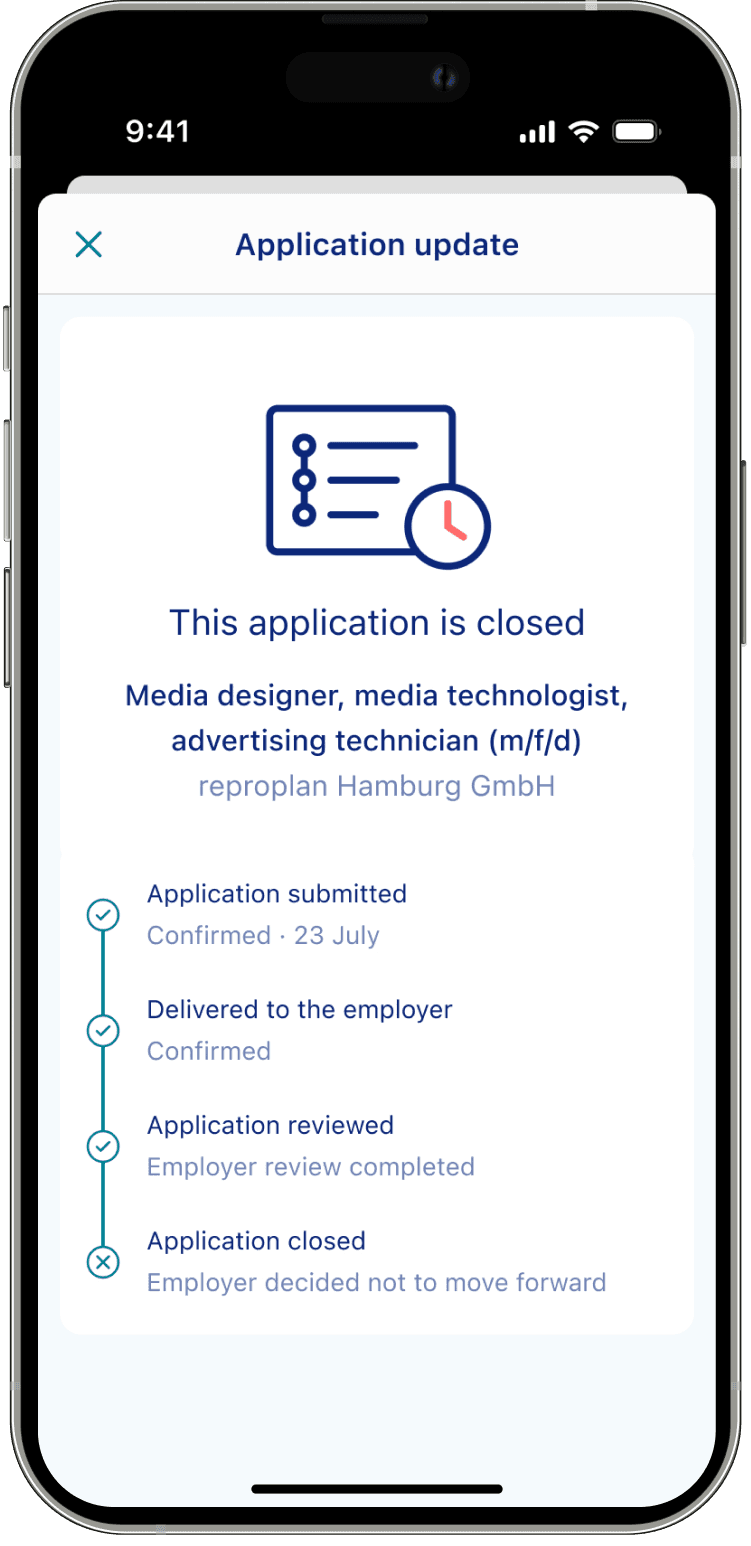
?
What if visibility only confirmed rejection?
What if visibility only confirmed rejection?
I started asking what the tracker would offer someone who kept being rejected. If their CV was weak or the roles were a poor fit, it could make the pattern visible without explaining why it was happening or helping them change the outcome.
I started asking what the tracker would offer someone who kept being rejected. If their CV was weak or the roles were a poor fit, it could make the pattern visible without explaining why it was happening or helping them change the outcome.
That did not make the tracker worthless, but it made visibility alone feel insufficient. I broadened the work beyond status and started looking at how Stepstone could help candidates decide what to do next.
That did not make the tracker worthless, but it made visibility alone feel insufficient. I broadened the work beyond status and started looking at how Stepstone could help candidates decide what to do next.
THE SUPPORT MODEL
THE SUPPORT MODEL
Support across three moments
Support across three moments
I used a simple working model to organise the broader opportunity across three moments: immediately after applying, during the wait and before the next application.
I used a simple working model to organise the broader opportunity across three moments: immediately after applying, during the wait and before the next application.
It helped me compare ideas that solved different parts of the experience instead of treating the tracker as the complete answer.
It helped me compare ideas that solved different parts of the experience instead of treating the tracker as the complete answer.
Right now
Right now
Did everything go through?
Did everything go through?
Reduce uncertainty. Confirm what happened and be honest about what Stepstone knows
Reduce uncertainty. Confirm what happened and be honest about what Stepstone knows
While I wait
While I wait
What can I do instead of just waiting?
What can I do instead of just waiting?
Give candidates something they can still act on, so waiting does not feel like the only option
Give candidates something they can still act on, so waiting does not feel like the only option
Next time
Next time
Could I improve my chances?
Could I improve my chances?
Support improvement without blame. Help candidates reflect on what they could change without pretending we know why they were rejected
Support improvement without blame. Help candidates reflect on what they could change without pretending we know why they were rejected
THE DECISION TRAIL
THE DECISION TRAIL
Decisions that shaped the experience
Decisions that shaped the experience
Each concept focused on one question. We shipped and tested three, dropped two during exploration and prepared one for future validation.
Each concept focused on one question. We shipped and tested three, dropped two during exploration and prepared one for future validation.
SHIPPED · A/B TESTED
Confirm the application before showing more jobs
The previous screen showed recommendations almost immediately after confirming the application.
I thought this was too quick: candidates had barely had time to register that their application was sent.
We tested a confirmation that stayed on screen until the candidate closed it. Recommendations moved below it, and email provided a record they could return to.
A/B test result
~37% relative increase in candidates submitting at least one additional application

 BeforeAfter
Decision 1 of 6
SHIPPED · A/B TESTED
Confirm the application before showing more jobs
The previous screen showed recommendations almost immediately after confirming the application.
I thought this was too quick: candidates had barely had time to register that their application was sent.
We tested a confirmation that stayed on screen until the candidate closed it. Recommendations moved below it, and email provided a record they could return to.
A/B test result
~37% relative increase in candidates submitting at least one additional application
BeforeAfterDecision 1 of 6
SHIPPED · A/B TESTED
Confirm the application before showing more jobs
The previous screen showed recommendations almost immediately after confirming the application.
I thought this was too quick: candidates had barely had time to register that their application was sent.
We tested a confirmation that stayed on screen until the candidate closed it. Recommendations moved below it, and email provided a record they could return to.
A/B test result
~37% relative increase in candidates submitting at least one additional application
Decision 1 of 6
BeforeAfterTHE OUTCOME
THE OUTCOME
Measurable, but not definitive
Measurable, but not definitive
What did the results tell us?
What did the results tell us?
The experiments increased repeat applications, views of recommended jobs and job alert creation. They did not tell us whether those additional applications were better matched or led to more interviews.
The experiments increased repeat applications, views of recommended jobs and job alert creation. They did not tell us whether those additional applications were better matched or led to more interviews.
I see the results as evidence that the screen helped candidates continue their search, not that it improved the overall job-search experience.
I see the results as evidence that the screen helped candidates continue their search, not that it improved the overall job-search experience.
Why didn’t we prioritise the tracker?
Why didn’t we prioritise the tracker?
Prioritising the tracker would have meant committing to the solution with the biggest data and integration gaps. I preferred to split the problem into smaller hypotheses that we could test independently.
Prioritising the tracker would have meant committing to the solution with the biggest data and integration gaps. I preferred to split the problem into smaller hypotheses that we could test independently.
Tracking could still be developed later, as Stepstone’s application flows and data coverage improved.
Tracking could still be developed later, as Stepstone’s application flows and data coverage improved.
What changed beyond the screen?
What changed beyond the screen?
Before this project, the post-application screen was mostly treated as the end of the application flow. We shipped and tested three improvements and left the team with a clearer set of questions for the work that remained.
Before this project, the post-application screen was mostly treated as the end of the application flow. We shipped and tested three improvements and left the team with a clearer set of questions for the work that remained.
